2025 Research Awards: $6.4 Million to Advance Genetic Medicines for Rett
A look at RSRT's $6.4 million investment in 2025 to advance genetic medicines.
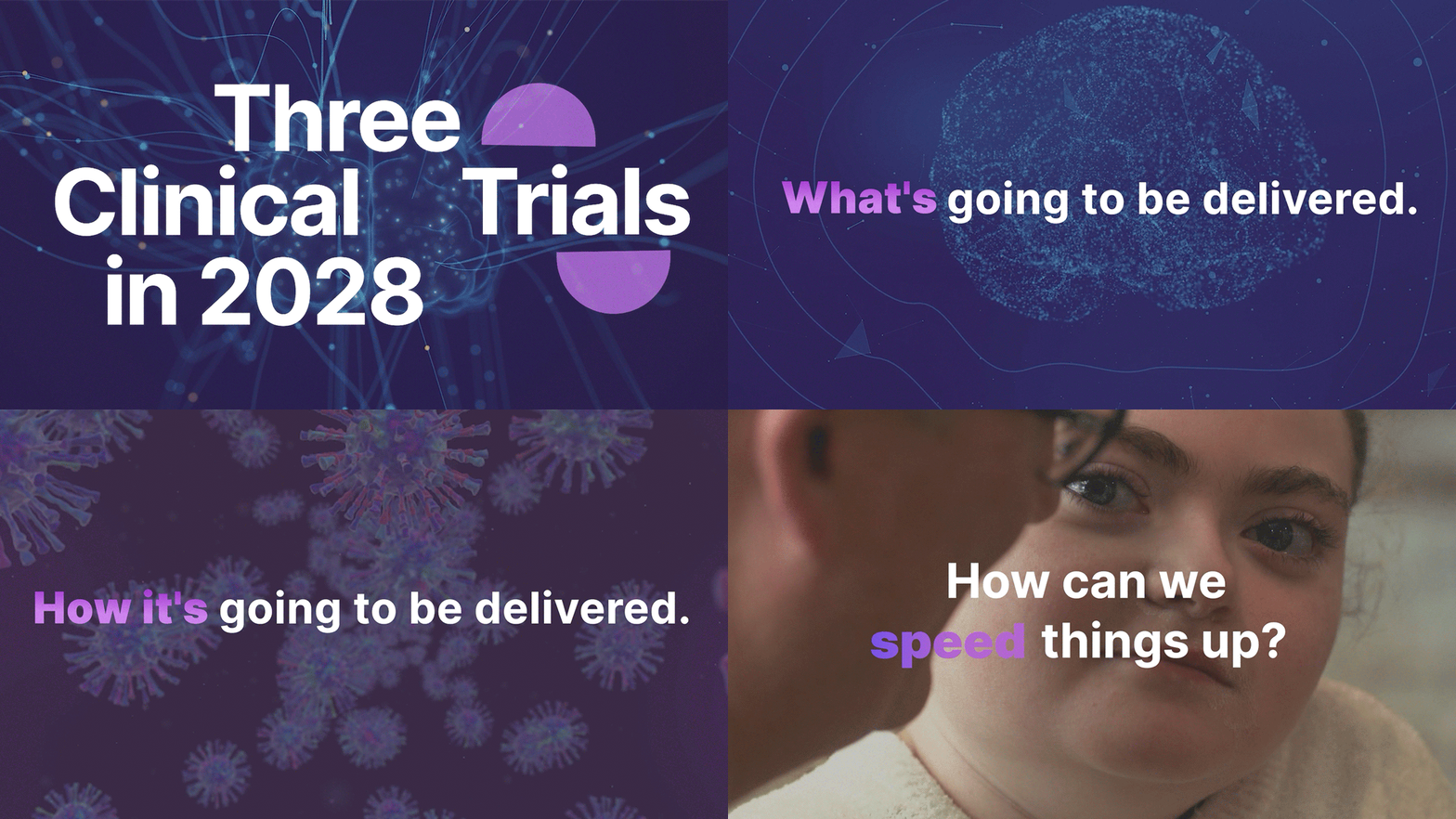
Every dollar raised for RSRT is put to work on behalf of the community we serve. Our 2025 research awards total $6.4 million, bringing our lifetime investment in Rett research to $92 million since 2008. That number reflects years of disciplined, strategic funding. It also reflects something more immediate: a portfolio of programs we believe can reach clinical trials in 2028.
This year's awards span both sides of the genetic medicine equation. Cargo + Delivery = Genetic Medicines
What We Deliver
Technological breakthroughs over the last decade have opened doors that did not previously exist. We're advancing multiple approaches that address mutations at the DNA and RNA level. Profluent Bio is using artificial intelligence to design next-generation base editors built from the ground up for Rett, compact and precisely targeted rather than adapted from existing technology. Tacit Therapeutics is advancing RNA trans-splicing, an approach that works with the cell's own machinery to replace mutated sections of MECP2. A single therapeutic could address nearly all MECP2 mutations, and because it works at the RNA level, it avoids the dosing challenges associated with gene replacement. Shape Therapeutics rounds out the cargo portfolio with an RNA editing approach using a viral delivery system developed in-house.
How We Deliver
Reaching every region of the brain safely and efficiently is one of the hardest problems in Rett therapeutics. Our delivery investments address this directly. CapX, the blood-brain-barrier-penetrating capsid we licensed from Apertura Gene Therapy in 2024, is moving toward human data this year through Apertura's own clinical program, data that will directly inform our Rett program. We're also investing in non-viral delivery through Evox Therapeutics' engineered exosome platform, exploring whether these naturally occurring vesicles can transport therapeutic cargo to the brain without the limitations of viral vectors.
The full awards hub includes videos, awardee details, and more on the science behind each program.