2025 Research Awards
$6.4M to Advance Genetic Medicines for Rett
The 2025 awards bring our total investment in Rett cures to $92 million. The newest awards invest in both parts of genetic medicines: what we deliver and how we deliver it, with a goal of advancing the next wave of therapeutics to clinical trials in 2028.
We do more than simply provide funding from the sidelines. We’re embedded in the work. RSRT is led by seasoned drug development veterans with deep Rett experience who work side by side with biopharma companies and academia to bring genetic medicines closer to the clinic.
What We Deliver
Technological breakthroughs over the last decade have opened doors that simply didn’t exist before. We’re advancing multiple approaches that address mutations at the DNA and RNA level, moving as fast and as far as our funding allows.


AI-Designed Base Editing
Profluent Bio is using artificial intelligence to design next-generation gene-editing tools. With a $1 million award from RSRT, the company is developing compact, tightly controlled adenine base editors that can fit into a single AAV and target a broader range of Rett mutations. This investment advances precision DNA editing toward clinical translation.
Tacit Therapeutics
RNA Trans-Splicing
Tacit Therapeutics is advancing a technology that is very exciting and relevant for Rett. RNA trans-splicing hijacks a naturally occurring phenomenon in the cells to remove the mutated sections of the MECP2 protein and replace them with healthy ones. Importantly, this approach can address all MECP2 mutations and avoids any possibility of producing too much MECP2 protein. RSRT has awarded Tacit $1 million to explore whether RNA trans-splicing molecules can be developed for Rett.


Shape Therapeutics
RNA Editing
Most RNA editing approaches deliver small RNA strands directly into the cerebral spinal fluid via an intrathecal injection. Shape Therapeutics, however, is using a viral capsid developed in-house and achieving high levels of editing efficiency. RSRT’s award further supports Shape's ongoing work and will provide RSRT an opportunity to compare the two alternate delivery strategies.

How We Deliver
Rett syndrome affects every region of the brain. To see meaningful improvement, genetic medicines must reach as many brain cells as possible, as safely as possible. Crossing the blood-brain barrier and achieving brain-wide distribution are essential. Our partnerships focus on developing smarter delivery technologies that make that possible.

In December 2024, RSRT licensed a viral delivery technology called CapX, developed by Apertura Gene Therapy. CapX can be delivered through an IV injection enabling broad and efficient distribution through the brain's vast network of blood vessels. Because it reaches the brain efficiently, lower doses are needed meaning reduced toxicity risk and lower manufacturing costs.
CapX is expected to enter clinical trials later this year for an internal Apertura program. Importantly, human data from this program will inform and pave the way for Rett clinical trials using CapX.


Exosome delivery platform evaluation
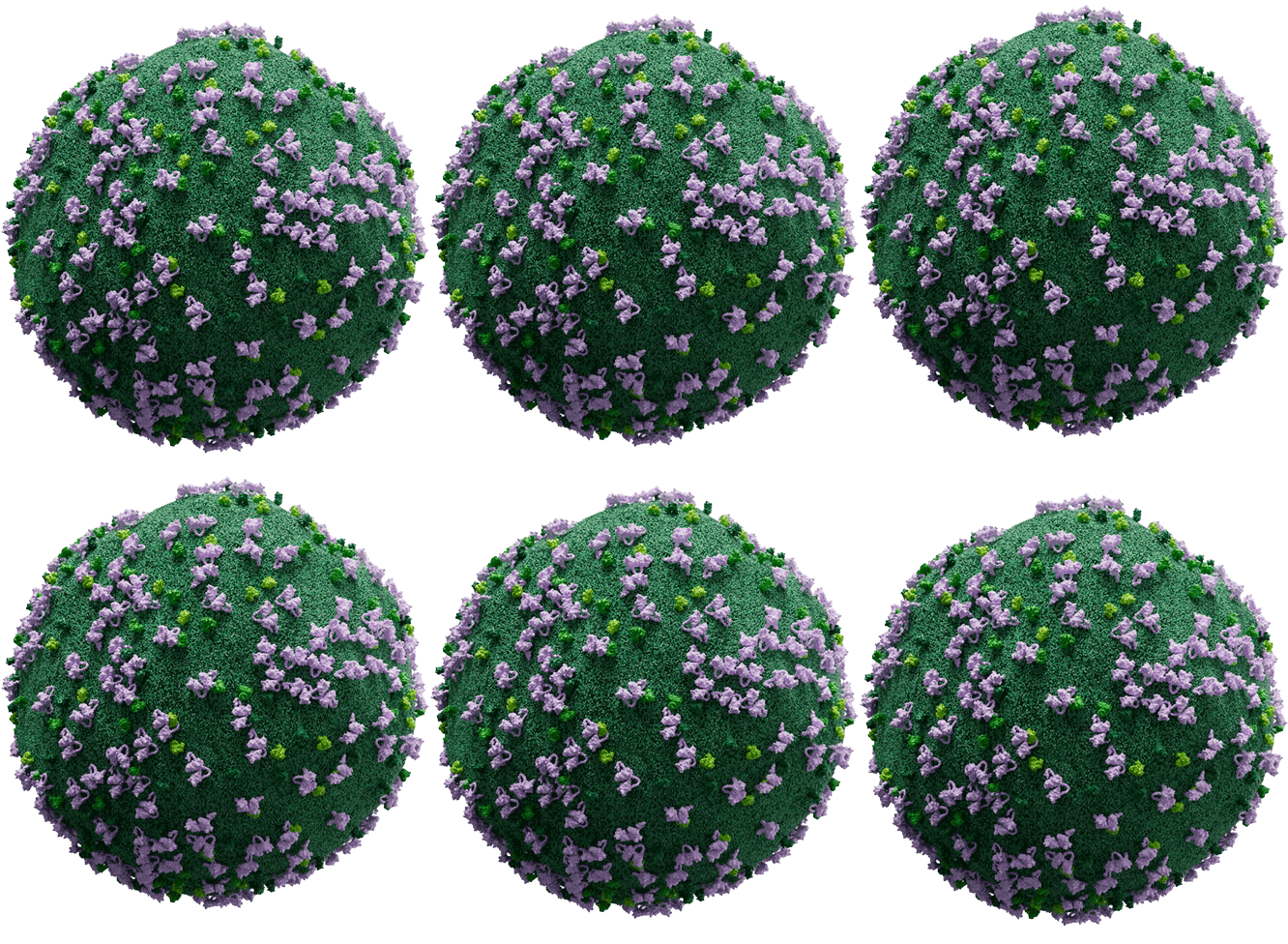
Evox Therapeutics is an Oxford, UK based biotech that is advancing a next-generation non-viral delivery platform based on engineered exosomes — naturally occurring vesicles that can transport therapeutic cargo into cells. Non-viral approaches offer advantages over viral delivery including the ability to redose and to accommodate larger cargos, and ease of manufacturing.
RSRT’s award will explore whether exosomes can be utilized to deliver base editors to the brain. This investment aligns with RSRT’s strategy to explore multiple delivery pathways in parallel.