

Rett Syndrome Takes Center Stage at MIT's RareNet
RSRT was honored to be part of RareNet’s inaugural symposium, an event bringing together some of the most important voices in rare disease research.
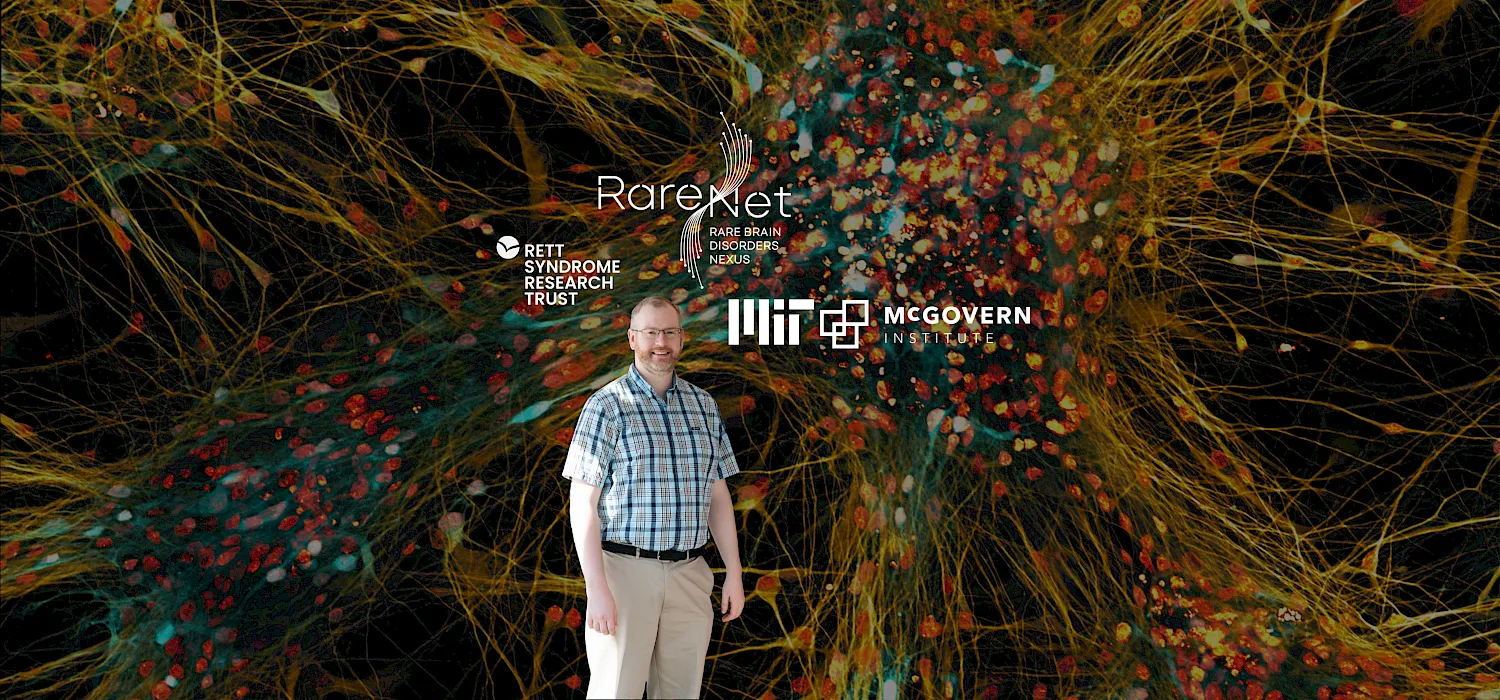
In the fall of 2025, MIT's McGovern Institute for Brain Research launched the Rare Brain Disorders Nexus, known as RareNet, a new initiative designed to do exactly what the rare disease field has long needed: bring everyone to the same table. Made possible by a generous philanthropic gift from MIT alumni Ana Méndez and Rajeev Jayavant, RareNet unites neuroscientists, physicians, patient advocacy organizations, and biotech companies under a shared mission of getting effective treatments to people living with rare brain disorders.
We are very excited that Rett syndrome is one of four conditions selected for RareNet's inaugural wave of projects along with prion disease, Sturge-Weber syndrome and SYNGAP1 disorders.
What RareNet is and why it matters
RareNet operates on a simple but powerful fact that rare diseases are individually rare but collectively common. More than 300 million people worldwide live with a rare disorder, many of which affect the brain and nervous system. Because each condition affects a relatively small number of people, it has historically been difficult to attract pharmaceutical investment and build the critical mass of scientific and clinical expertise needed to move discoveries forward.
RareNet's answer is a two-pronged approach. First, a global consortium connects researchers, clinicians, and patient communities across different disorders, breaking down the silos that have slowed progress. Second, a therapeutic pipeline accelerator is designed to take early discoveries and de-risk them, helping promising science cross the gap between academic lab and clinical trial as efficiently as possible.
Leading RareNet as its inaugural faculty director is Professor Guoping Feng, the James W. and Patricia T. Poitras Professor of Neuroscience at MIT and associate director of the McGovern Institute. Guoping brings exactly the right combination of scientific depth and translational ambition to this role. In addition to studying the underlying mechanisms of how the neurons of the brain connect and how this connection is disrupted in neurological disorders, Guoping has also focused on translating this knowledge into therapies. His team's gene therapy for Phelan-McDermid syndrome, a rare autism spectrum disorder, has been licensed to Jaguar Gene Therapy and is currently in clinical trials and he is the co-founder of Emugen Therapeutics, which is pursuing a novel gene supplementation approach for Rett syndrome.
A Long-Standing Partnership With Guoping Feng
Guoping is a member of the RSRT gene editing consortium and has been funded by RSRT since 2019. His lab has taken a multi-pronged approach to developing potential therapeutics including creating new humanized mouse models, novel DNA base editors, and exploring next-generation viral capsids for delivery to the central nervous system. Seeing Guoping step into the faculty director role at RareNet feels natural. He understands the goal of rare disease research is not just to do interesting science but to help people, and that getting from one to the other requires the kind of deliberate, collaborative infrastructure that RareNet is now building.
RSRT at RareNet 2026
On June 9, 2026, RareNet held its inaugural symposium, "Accelerating Discovery to Treatment in Rare Brain Disorders," at MIT's Singleton Auditorium in Cambridge. The day brought together some of the most important voices in rare disease research, from CRISPR pioneer Feng Zhang to gene therapy trailblazer Katherine High to Sonia Vallabh, the scientist-patient who became one of the most compelling advocates for rare disease research after learning she carried the prion disease mutation that had killed her mother.
RSRT was honored to be part of this inaugural gathering. Together Monica and I presented "Reversing Rett: The Promise of Genetic Medicines," a talk that laid out why RSRT has been focused on genetic medicines, where the field stands and how we are continuing to help develop the next generation of therapies for Rett syndrome. It was re-affirming to hear that other patient groups who were represented at the symposium were following in our footsteps in outlining their own path to the clinic. It was a reminder of what makes the rare disease community different, the patient groups like RSRT, the Sturge-Weber Foundation, the FoxP1 medical research foundation and countless others do not wait for change, they make that change happen. It is this mission that RareNet recognizes and is clear ally in our quest for cures.
Why this matters for Rett families
For RSRT, RareNet represents something we have believed for a long time: that the Rett field is strong enough and the science is mature enough that we can work alongside top research institutions, in formal collaborative structures, to push toward treatments on a timeline that actually makes a difference. Having MIT's resources, networks, and credibility aligned with the Rett community is not a small thing. It is the kind of institutional commitment that changes what is possible.
We look forward to sharing more about how the Rett program at RareNet develops, and about the broader wave of genetic medicines that are now genuinely within reach.